In this article
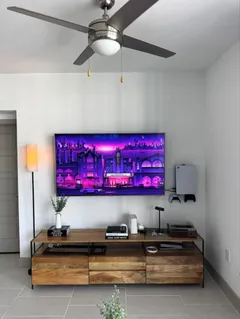
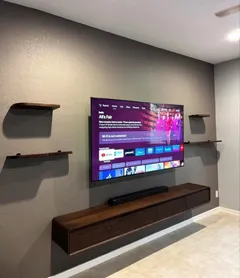
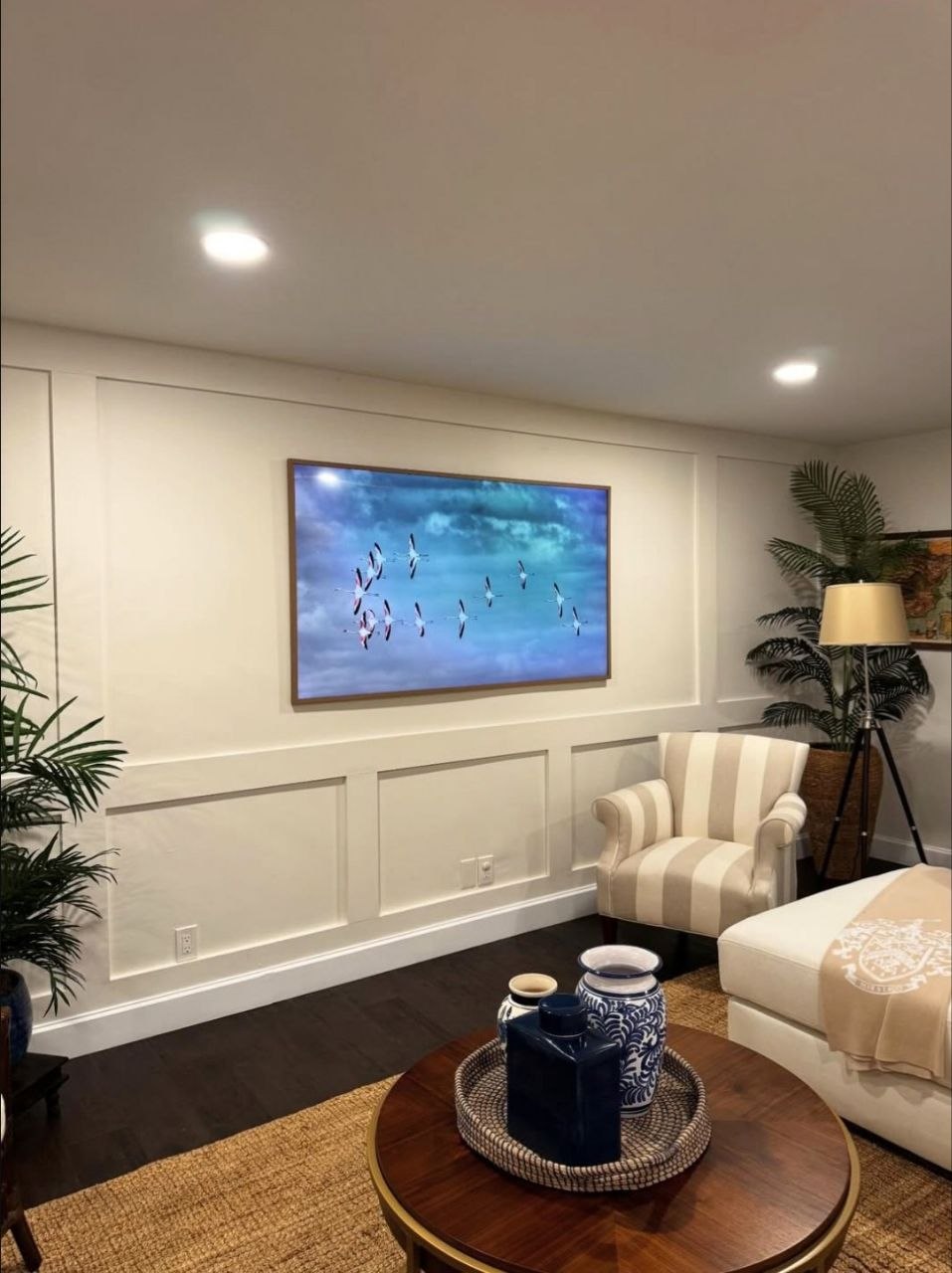
A wall-mounted TV with a bundle of cables hanging under it looks unfinished. Hiding them inside the wall is the clean fix — as long as it is done the way the electrical code allows. Here is the method we use on framed walls, and what to do when the wall is solid.
The rule that matters: no extension cords in walls
The TV's power cord and any extension cord are flexible cords, and the National Electrical Code (NEC 400.12) does not allow them inside walls. Heat builds up, the insulation is not rated for it, and there is no way to inspect it later. The legal solution is an in-wall power relocation kit: a recessed inlet behind the TV and another above the existing outlet, connected by in-wall-rated cable. You plug the TV into the upper box and a short jumper connects the lower box to the outlet.
What you need
- A UL-listed in-wall power kit (two recessed boxes, in-wall cable, jumper cord)
- In-wall-rated HDMI (look for CL2 or CL3 on the jacket)
- A drywall saw and a stud finder
- Fish tape or glow rods for pulling cables down the cavity
- A brush-plate or pass-through for low-voltage cables
Step by step
- Check the cavity. Make sure the space between two studs behind the TV is clear — no ductwork, plumbing or existing wiring. A small inspection hole behind where the TV will hang helps.
- Look for a fire block. Many walls have a horizontal 2x4 halfway up. You will need a long flexible bit to drill through it.
- Cut the openings. Trace the upper box behind the TV (so the TV will cover it) and the lower box about 12 inches above the floor, in the same stud bay.
- Fish the cable from the top opening down to the bottom one.
- Install the boxes and connect the cable per the kit instructions.
- Run HDMI and other low-voltage cables through a brush plate or the kit's pass-through.
- Plug in, test, then hang the TV.
Place the upper box so it sits in the gap between the mount's wall plate and the TV — otherwise the plug will push the TV off the wall. Right-angle plugs help with slim mounts.
When the wall is concrete, block or brick
There is no cavity, so in-wall routing is out. We run a slim paintable raceway from the TV to the outlet and paint it the wall color — hiding wires without cutting drywall shows how it looks. In condos, even hollow walls may be off-limits if the association does not allow cutting.
When to call an electrician
If you need a brand-new circuit, a new outlet that does not exist, or you see aluminum wiring, that is electrician work. The kit method above simply extends an existing outlet safely.
Rather have a pro do it?
Exact price in about a minute — TV size, wall type and cables included. Same-day in most areas, 3-year warranty on every install.
We install in-wall power kits every day — $69 per TV on framed walls, and a paintable raceway for $39 on block and concrete. The wire-hiding tool lists the parts if you are doing it yourself.
Gear mentioned in this article
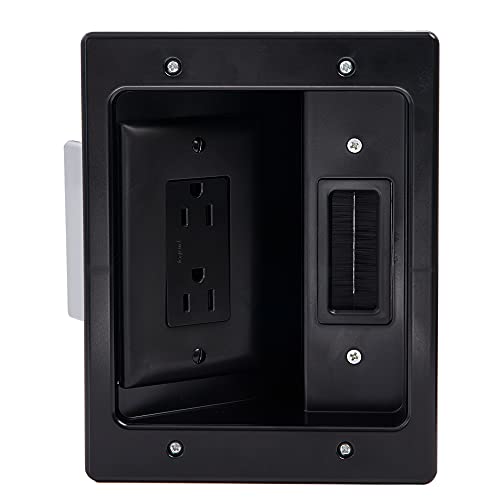 LegrandIn-wall power kit: a code-compliant outlet behind the TV.Check price →
 LEENUE Brush Wall Plate, Single Gang Cable Pass Through, 2 Pack, WhiteBrush wall plate: a clean exit for cables through drywall.Check price →
 Klein Tools 56335 25-Foot x 1/4-Inch Flat Electrical Fish Tape, SteelFish tape or glow rods: pulls cable through a stud bay.Check price →
 Legrand Pass & Seymour TV3LVKITWCC2 3 Gang Recessed TV Box with Low…Recessed box: plugs sit inside the wall, not behind the panel.Check price →
As an Amazon Associate, TV Mount Q earns from qualifying purchases. We never show a price here: Amazon prices change daily, so the button takes you to the current one.