In this article
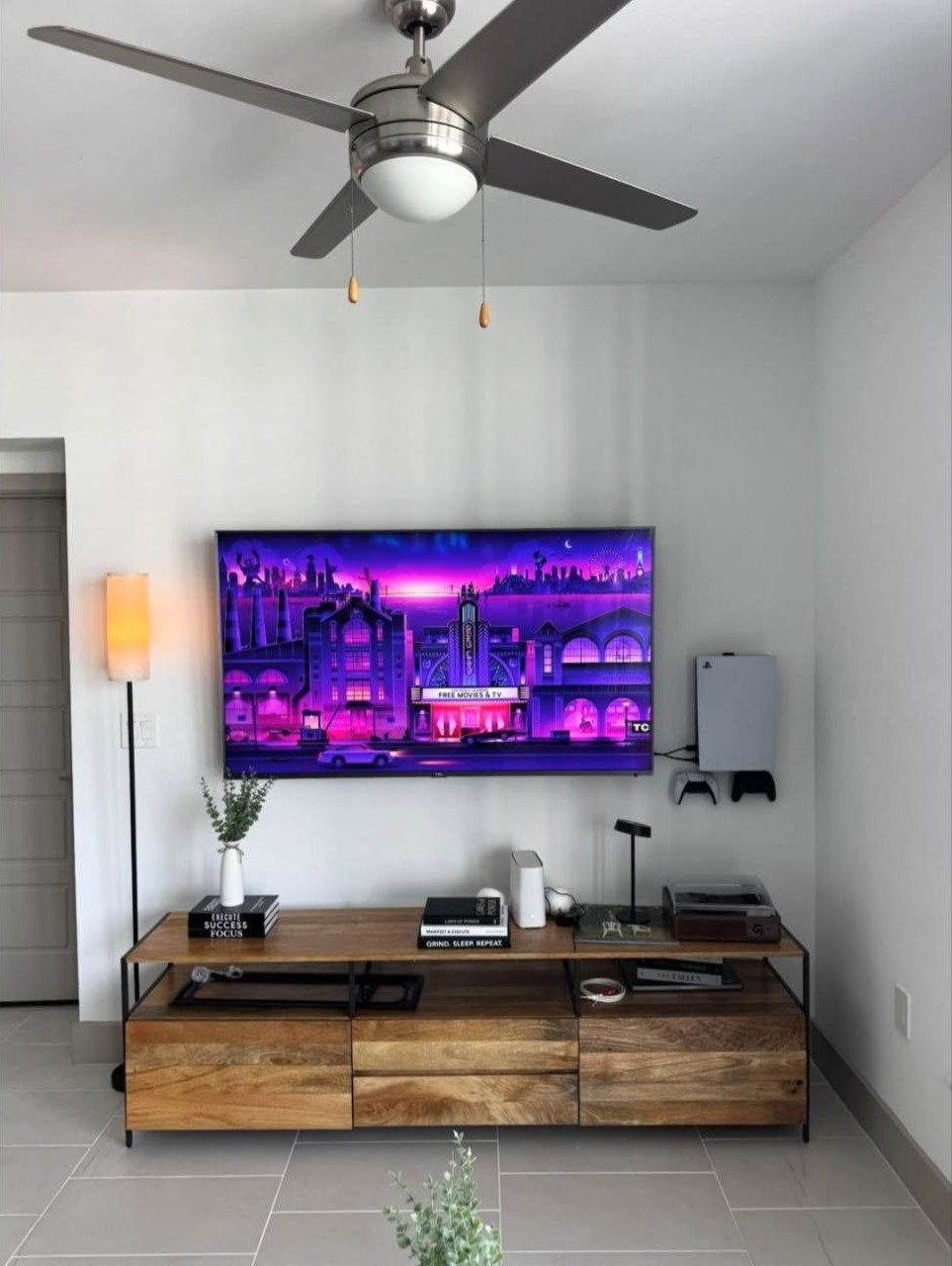
On concrete block, poured concrete, brick, or any wall you are not allowed to open, a raceway is how cables disappear. Done well, it is a thin painted line from the TV to the outlet that most visitors never notice. Done badly, it is a crooked white strip. Here is the difference.
Pick the right size
| Cables | Raceway width |
|---|---|
| Power only | 3/4 in |
| Power + 1–2 HDMI | 1-1/4 in |
| Power + 3–4 cables (soundbar, console) | 1-1/2 to 2 in or a cable spine |
Too small and the lid will not snap shut; too big and it looks like a pipe.
Plan the route
- Straight down from the center of the TV to the outlet, or down to the baseboard and then sideways.
- Avoid diagonals and zigzags — the eye reads a vertical line as part of the wall.
- If the outlet is far away, run down to the baseboard and follow it with a low baseboard channel.
- Keep the top end hidden behind the TV.
Cut, mount, paint
- Measure and cut the channel with a fine-tooth saw or the cutter that comes with the kit. Use elbow and corner pieces rather than bending.
- Paint first — lightly scuff the plastic, prime, then paint with the wall's color and sheen.
- Clean the wall with rubbing alcohol so the adhesive grabs.
- Stick the base, then add a couple of small screws at the ends (masonry screws on block or concrete).
- Lay the cables in, snap the lid on, touch up any scuffs.
On concrete and block
This is the everyday case in South Florida. The adhesive alone struggles on textured paint over block; two small Tapcons or plastic anchors in the channel base keep it tight for years. See mounting on concrete.
When you can go inside the wall instead
On a framed wall you own, in-wall routing gives a cleaner result — hiding TV wires in the wall explains the code-compliant way.
Rather have a pro do it?
Exact price in about a minute — TV size, wall type and cables included. Same-day in most areas, 3-year warranty on every install.
A painted raceway install with us is $39 per TV. The wire-hiding tool lists the parts for your wall if you are doing it yourself.
Gear mentioned in this article


As an Amazon Associate, TV Mount Q earns from qualifying purchases. We never show a price here: Amazon prices change daily, so the button takes you to the current one.