In this article
Tilt and swivel mounts solve different problems. Picking the wrong one is the most common regret we hear — usually a full-motion arm that never moves or a tilt mount in a room where half the family watches from the kitchen.
Side by side
| Tilting | Full-motion (swivel) | |
|---|---|---|
| Movement | Tilts down (and a little up) | Tilts, swivels left/right, extends |
| Distance from wall | 2–3 in | 3–4 in folded, 15–25 in extended |
| Best for | TV above eye level, one viewing spot | Corners, open plan, several seats |
| Wall load | Low | High — the arm is a lever |
| Anchoring | 4 fasteners | 6 fasteners, two studs minimum |
| Price with us | $49 | $69 |
When to choose tilt
- Bedrooms — the TV sits higher and you look slightly up from the bed.
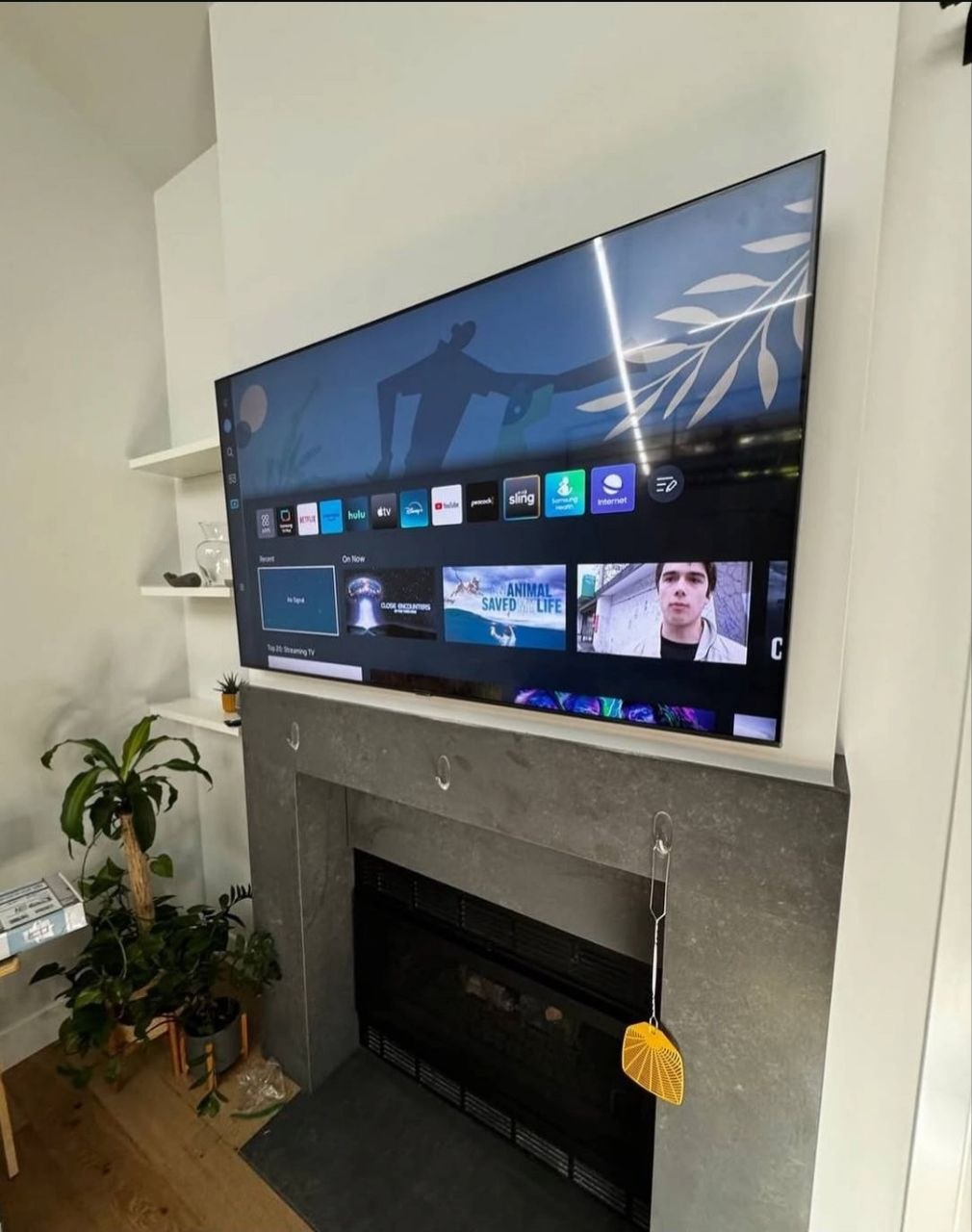
- Above a console or fireplace — tilt brings the screen's face toward your eyes.
- Glare from a window behind you — a few degrees down removes the reflection.
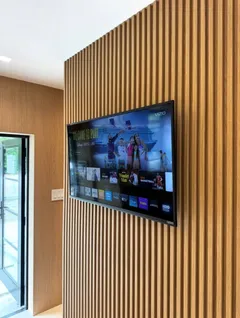
- You want a clean look — tilt mounts stay close to the wall.
When to choose full-motion
- Corners — the arm reaches out of the corner and turns the screen toward the seat. See corner and ceiling mounts.
- Open-plan rooms — face the sofa at night, the kitchen island on Sunday.
- Access to ports — you can pull the TV out to plug in a console.
- Wide rooms — seats at sharp angles to the wall.
The honest middle ground
If you think you will move the TV "sometimes," you probably will not. Most full-motion arms we install stay in one position after the first week. If the main seat is straight ahead, a tilt mount looks better and puts far less stress on the wall.
Wall matters more for full-motion
A 65-inch TV on a 20-inch arm pulls hard on the top fasteners. On wood it needs two studs; on concrete block, six sleeve anchors; on metal studs, six snap-toggles across two studs. Hollow drywall alone is never OK.
Rather have a pro do it?
Exact price in about a minute — TV size, wall type and cables included. Same-day in most areas, 3-year warranty on every install.
Not sure? Tell us the room in the calculator and we will bring the right mount. The height calculator helps decide whether you need tilt.
Gear mentioned in this article
 PERLESMITH Tilting TV Wall Mount for 23–60 inch TVs up to 115 lbsTilting bracket: angles the screen down when it hangs high.Check price →
 Mounting Dream Full Motion TV Wall Mount for 32-70 Inch TVs up to 110lbsArticulating arm: pulls out, swivels and tilts.Check price →
 Mounting Dream Fixed TV Wall Mount Low Profile TV Bracket for 42-90 Inch TVFixed bracket: the panel sits flat, closest to the wall.Check price →
As an Amazon Associate, TV Mount Q earns from qualifying purchases. We never show a price here: Amazon prices change daily, so the button takes you to the current one.